
Follow our social community |


Newsroom
ILRI bioscience hub to support international One Health research consortium
- Details
- Written on Wednesday, 26 July 2017 17:09
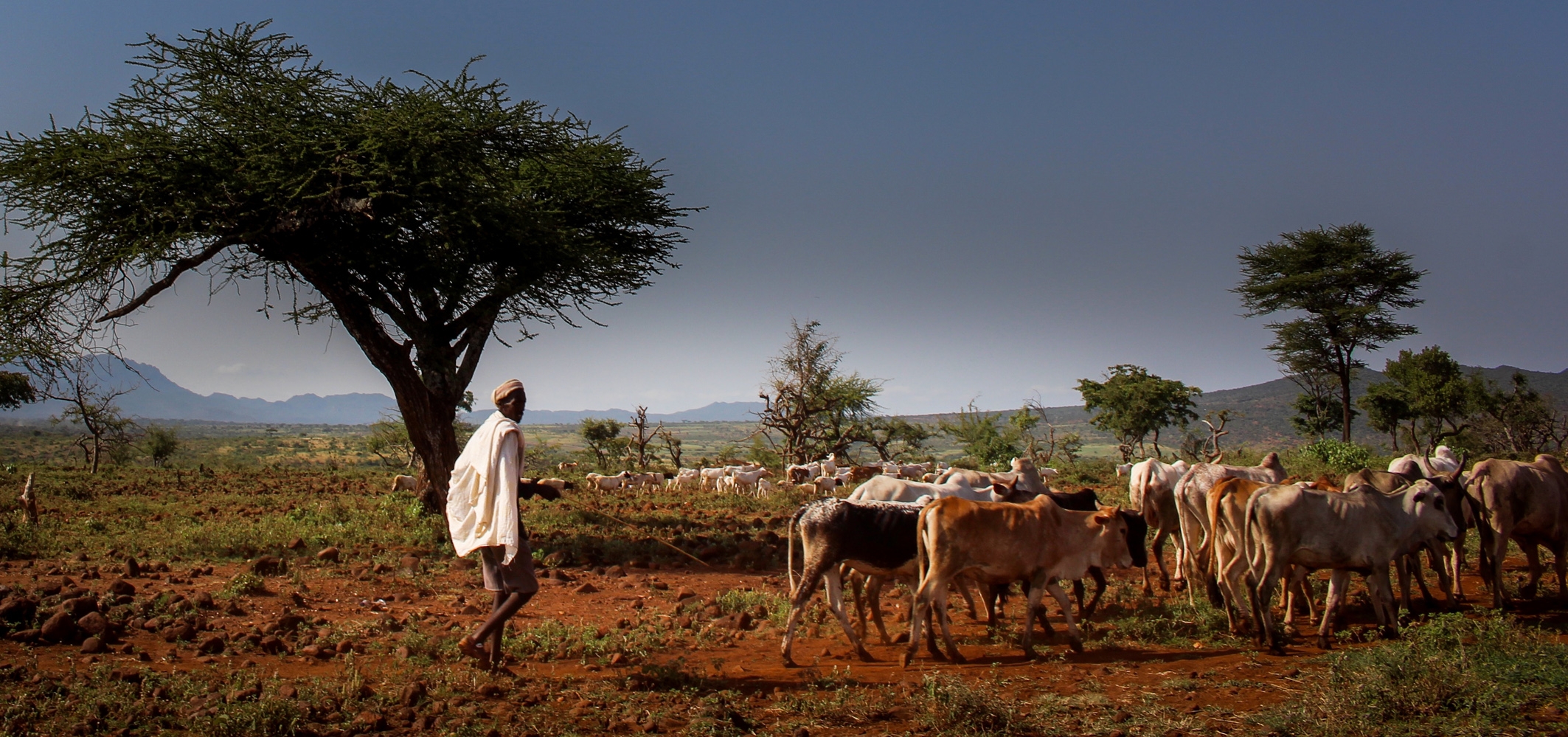
Boran cattle and herdsman in Yabello Ethiopia (photo: ILRI/ Camille Hanotte).
The Biosciences eastern and central Africa-International Livestock Research Institute (BecA-ILRI) Hub is set to be the centre for training and capacity strengthening in a new international One Health initiative.
ILRI's state-of-the art biosciences hub will be used in the implementation of the GBP 7.7 million grant to University of Liverpool to increase capacity for ‘One Health’ research in the Horn of Africa. The One Health Regional Network for the Horn of Africa (HORN) project led by University of Liverpool brings together partners from Kenya, Ethiopia, Somalia and Eritrea. The program will deepen existing University of Liverpool and ILRI links, already well established through several joint UK Research Council projects.
Livestock play a critical role in the economies of low- and middle-income countries where up to three-quarters of a billion of the poorest people rely on livestock farming and products to make a living. However, livestock also pose human health risks because their ability to transmit infectious diseases.
Project-lead Professor Matthew Baylis, from University of Liverpool’s Institute of Infection and Global Health, said:
‘Our hope is to understand better the health links between people, animals and the environment. This should lead to improved nutrition, less risk of new diseases emerging from animals, and more prosperity… as well as a strong system in place for conducting further research.’
The grant has been awarded by the Research Councils UK (RCUK) from the Global Challenges Research Fund (GCRF) Growing Research Capability call which aims to build upon research knowledge in the UK, and strengthen local capacity to address priority challenges in the developing countries.
The project will start in October 2017 and will run for four years.
Read full story: 'One Health’ research awarded £7.7million from Global Challenges Research Fund
Research solidarity for food security: BecA-ILRI Hub alumni communities of practice
- Details
- Written on Monday, 10 July 2017 17:12
From 3-7 July 2017, the Biosciences eastern and central Africa-International Livestock Research Institute (BecA-ILRI) Hub mobilized 17 researchers representing 12 communities of practice (CoPs) to develop concepts for research on key agricultural challenges in Africa. The CoPs formed through the BecA-ILRI Hub’s Africa Biosciences Challenge Fund (ABCF) program and comprising researchers within national agricultural research systems across the region are developing proposals to respond to funding calls on agricultural research for development.
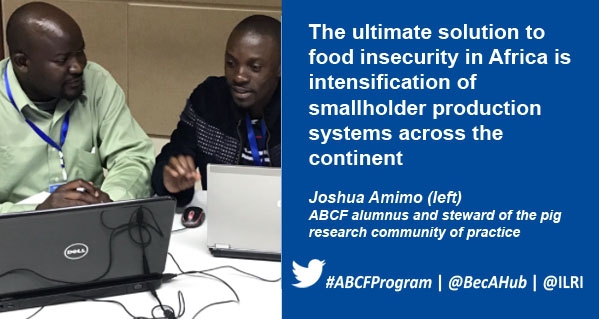
Although agriculture is viewed as the sector with the greatest potential to transform Africa’s economy (AfDB, 2016), it continues to face the challenges of low productivity across all farming systems. In the Science Agenda for Agriculture in Africa (S3A) document—a roadmap towards transforming Africa’s agriculture—regional collaborations, that enable the attainment of economies of scale in terms of human, technological and financial resource, are singled out as a means to achieving the vision of a food-secure Africa by 2030.
‘Many agricultural problems in Africa are common to more than one country and as such, it is more effective use a concerted approach across countries and institutions in tackling these issues,’ said BecA-ILRI Hub principal scientist Roger Pelle, emphasizing the importance of the CoP approach to research for development.

The concept note write-shop is a follow-up of a facilitated proposal writing workshop held for the same CoPs in April 2017 involving 50 participants from 16 African countries—Benin, Burundi, Cameroon, Côte d’Ivoire, Democratic Republic of Congo, Ethiopia, Ghana, Kenya, Madagascar, Malawi, Nigeria, Rwanda, South Sudan, Tanzania, Uganda and Zambia. Through these CoPs, the investment in the ABCF program is gaining momentum beyond individual and institutional capacity strengthening.
‘We see this as a powerful approach to harness the power of our alumni and multiply the initial investment made towards their fellowship at BecA-ILRI Hub,’ said Wellington Ekaya who heads the ABCF program.
The proposals being developed crystallized around research themes responding to sustainable development goals (SDGs) 1, 2 and 13 (no poverty, zero hunger and climate action). They included research on crop and livestock health, livestock genetics, crop improvement, food safety and climate change mitigation.
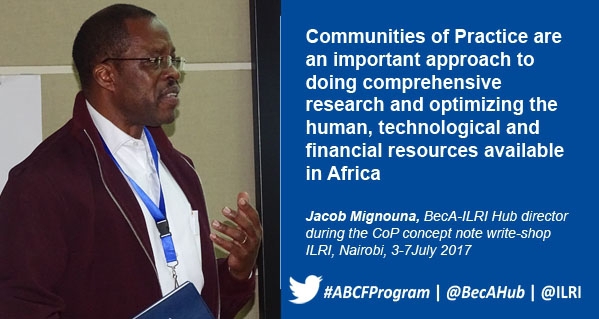
In his address to the write-shop participants, the BecA-ILRI Hub director Jacob Mignouna advised the researchers to critically consider the value proposition of their proposals.
‘Sciences is good, but your proposals should clearly articulate the economic impact of your research,’ said Mignouna, adding that it was important for the CoPs to consider how the products of their research would be transferred to the ultimate beneficiaries—the resource poor smallholder farmers in Africa.
Statistical modeling and genomics to enhance livestock breeding in Africa
- Details
- Written on Saturday, 01 July 2017 17:16
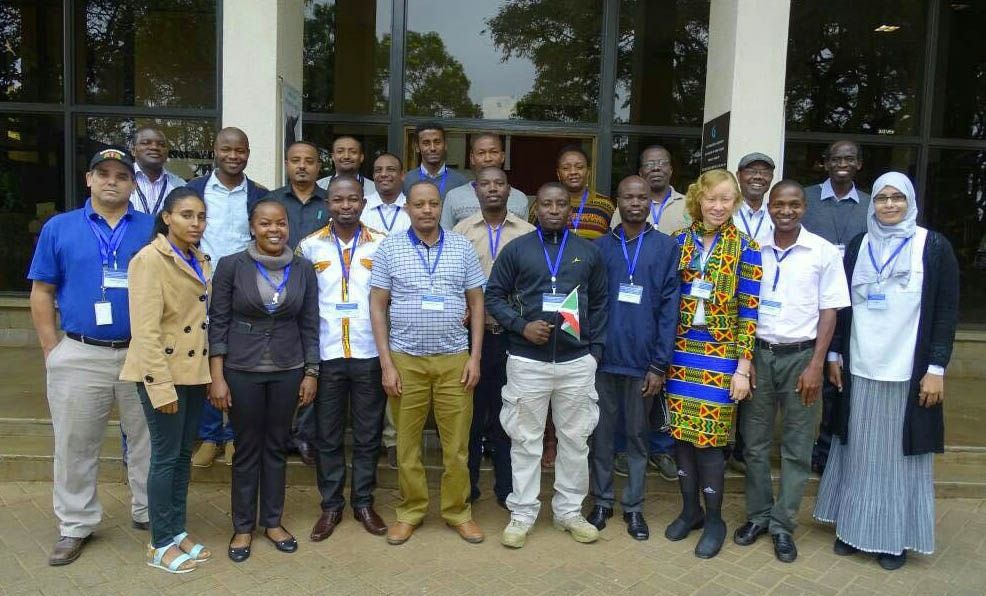
Participants of the BecA-ILRI Hub's 2017 Animal Quantitative Genetics and Genomics workshop pose with the trainers Romdhane Rekaya (left), Raphael Mrode (back row right) and Sammy Aggrey (back row second right). (photo: BecA-ILRI Hub/Brian Otieno)
June 30, 2017 marked the final day of the Animal Quantitative Genetics and Genomics training held by the Biosciences eastern and central Africa-International Livestock Research Institute (BecA-ILRI) Hub in Nairobi. The workshop was held as one of the BecA-ILRI Hub’s Africa Biosciences Challenge Fund (ABCF) program annual trainings in key skill areas.
The increasing demand for animal protein in emerging economies in Africa presents opportunities to sustainably improve livestock productivity. A better understanding of quantitative genetics—the basis of traits controlled by multiple genes in livestock—underpins the development of more successful livestock breeding programs that could accelerate animal protein production and move Africa towards food security.
For 10 days, 21scientists from national agricultural research systems (NARS) of 14 African countries—Benin, Burkina Faso, Burundi, Cameroon, Chad, Democratic Republic of Congo, Ethiopia, Ghana, Kenya, Nigeria, Rwanda, Somalia, Sudan and Tanzania—participated in the course that gave them skills to support their research in livestock improvement including: population and quantitative genetics, linear models, variance components, selection principles, breeding strategies, genome selection and implementation of statistical tools in animal breeding.
Researcher Salome Shayo from Tanzania Fisheries Research Institute acknowledged the relevance of the workshop to fish breeding programs in Tanzania. Shayo is involved in research to improve the growth rate, survival, age at maturity, and carcass quality of tilapia fish, which will be produced by smallholder farmers in the country.
‘The knowledge I gained from the workshop has enabled me design a selective breeding program for improvement of tilapia production in Tanzania,’ said Shayo, who plans to start the breeding process with wild stock selected for genetic variation and heritability of traits of interest.
Echoing Shayo’s sentiments, tutorial fellow Sophie Miyumo from Egerton University in Kenya commented:
‘Attending this workshop gave me clarity in my proposal for research on indigenous chicken which I intend to carry out through the ABCF fellowship program.’
Julius Hagan, a senior lecturer from the University of Cape-Coast in Ghana requested that the workshop be offered to an even broader pool of scientists as he considered the training to be beneficial and needed by so many African countries.
The workshop was facilitated by: Raphael Mrode, ILRI principal scientist and professor in quantitative genetics and genomics at the Scotland Rural College; Samuel E. Aggrey, professor at University of Georgia’s Department of Poultry Science and Institute of Bioinformatics; and Romdhane Rekaya, professor at the University of Georgia’s Department of Animal and Dairy Science and Institute of Bioinformatics. The trainers are among BecA-ILRI Hub’s extended faculty comprising affiliated scientists drawn from institutions across the globe, which enables a broader scope of scientific advice, supervision and training through the ABCF program
Swedish funding to boost bioscience research and capacity building in eastern and central Africa
- Details
- Written on Friday, 30 June 2017 17:22
The Biosciences eastern and central Africa-International Livestock Research Institute (BecA-ILRI) Hub has received USD 5.5 million to support the increased application of biosciences to boost agricultural productivity in the eastern and central Africa.
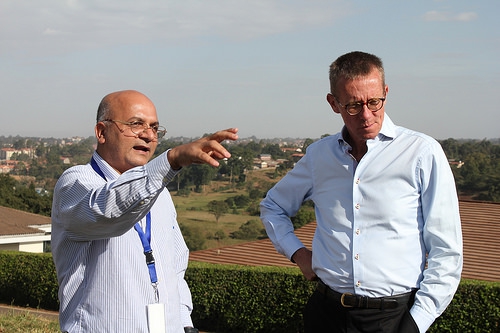
Claes Kjellström with BecA-ILRI Hub scientist Sita Ghimire during his visit to the BecA-ILRI Hub in 2015. Ghimire led the Swedish funded project on ‘Climate smart Brachiaria grass to increase livestock production in East Africa’covering Kenya and Rwanda(photo: BecA-ILRI Hub\Marvin Wasonga)
The grant to the BecA-ILRI Hub has been awarded by the Swedish government through the Swedish International Development Cooperation Agency (Sida), for a period of five years starting from 1 July 2017.
The support of the Government of Sweden to the BecA-ILRI Hub started in 2011. The resources were targeted to the development of a comprehensive mix of innovative research for development and capacity building activities under the food security program.
Building on the successes of the food security program, Sida funded another program on Climate-smart Brachiaria grasses to increase livestock production in East Africa in 2012. This program is aimed at enhancing availability of quality forage for dry semi-arid lands and other agro-ecological zones of Kenya and Rwanda.
Sida senior policy specialist Claes Kjellström said that so far, the BecA-ILRI Hub has had excellent performance and attained all agreed objectives with very few risks. He added:
‘The BecA-ILRI Hub’s approach to research for development is consistent with the Swedish government’s strategy of creating synergies between research across different programs and with other development investments’.
Agreeing with Kjellström, BecA-ILRI Hub director Jacob Mignounga said:
‘The BecA-ILRI Hub is the right program for the region and such funding will help ensure that we maintain our course in achieving agricultural transformation and a great future for Africa.’
Jimmy Smith, ILRI director general appreciated Sweden’s decision to fund agricultural research amid a general shift in priorities for development funding saying:
‘We realise that the enormous pressure to give precedence for overseas development funding to education, healthcare, national security, climate change and emergency assistance compared to agriculture. This funding is therefore a testament to the significance placed by Sweden in the development outcomes of the BecA-ILRI Hub’s interventions.’
In 2013, Sida awarded a supplementary grant to the BecA-ILRI Hub that provided additional resources for research, capacity building and strengthening technology platforms of the BecA-ILRI Hub and three NARS institutions.
This new support to BecA-ILRI Hub’s research, capacity building and technology platforms will facilitate the strengthening of existing partnerships with national agricultural research systems and other donor funded initiatives that are visibly contributing to the Comprehensive Africa Agriculture Development Programme (CAADP) agenda.
Australian Centre For International Agricultural Research CEO Visits ILRI
- Details
- Written on Friday, 30 June 2017 17:18
On 27 June 2017, Andrew Campbell, chief executive officer of the Australian Centre for International Agricultural Research (ACIAR) visited the International Livestock Research Institute (ILRI) in Nairobi. As part of the visit, Campbell, who was accompanied by Mellissa Wood, ACIAR’s general manager for global programs, toured the Biosciences eastern and central Africa-ILRI (BecA-ILRI) Hub laboratory facilities.
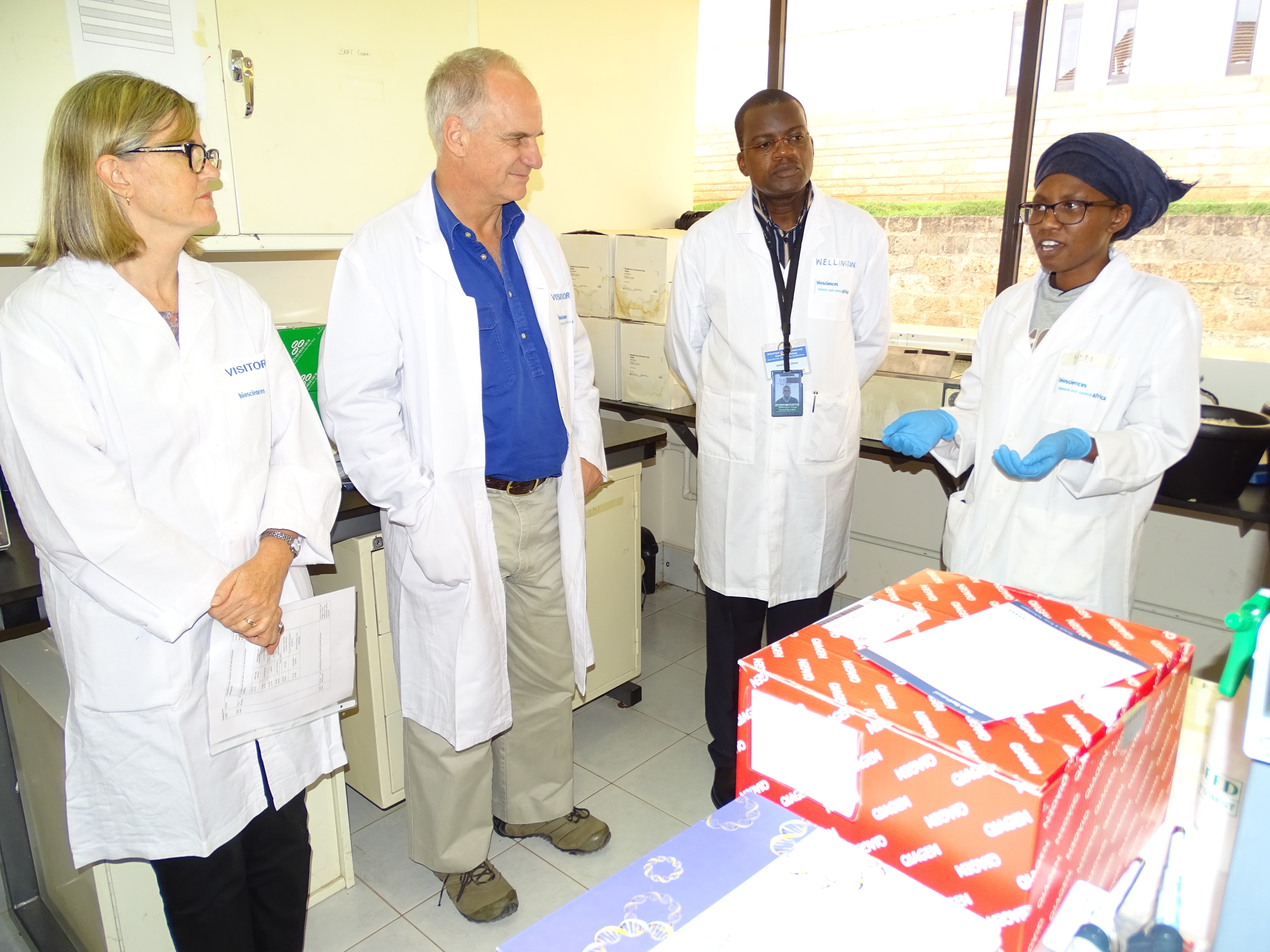
ACIAR CEO Andrew Campbell and general manager for global programs Mellissa Woods talk to Aissatou Diddi, the deputy head of vaccine production at Cameroon’s National Veterinary Laboratory (LANAVET), in Garoua. Diddi is at the BecA-ILRI Hub through an Africa Biosciences Challenge Fund (ABCF) fellowship to conduct research on the occurrence, spread and possible control of the goat plague—Peste des Petits Ruminants (PPR)—in northern part of Cameroon. PPR is an economically significant disease for the largely smallholder livestock producers in Cameroon and is among the areas of research at the BecA-ILRI Hub which received funding from the Australian Government between 2011 and 2017 (photo: BecA-ILRI Hub/Brian Otieno)
Among the highlights of the facilities tour were discussions with scientists from national agricultural research institutions who are currently research fellows at the BecA-ILRI Hub through the Africa Biosciences Challenge Fund (ABCF) program. Various governments and donor agencies—Australia, Bill & Melinda Gates Foundation, Sweden, Syngenta Foundation for Sustainable Agriculture, and the UK Department for International Development (DFID)—fund the ABCF program which provides access to high-end bioscience facilities, and hosts research by African scientists and their partners working to tackle key challenges to food and nutritional security on the continent.
Through support to the ABCF program’s 2016 Advanced Genomics and Bioinformatics training workshop, ACIAR facilitated the training of four national crop breeders who are part of an initiative— Demand led plant variety design for emerging markets in Africa—is developing plant varieties suited to market demands in Africa.
Campbell and Wood also visited the Integrated Genotyping Service and Support platform set up with funding from BMGF and implemented in partnership with Australian genotyping and information technology company, Diversity Arrays Technology Pty Ltd (DArT); held discussions with ILRI scientists involved in vaccine research and measurement of green house gas emissions in livestock production systems; and visited the ILRI bio-repository which provides long-term storage for biological material, as well as management of and access to associated data.
New initiative to accelerate crop improvement for food security in Africa
- Details
- Written on Friday, 16 June 2017 17:25
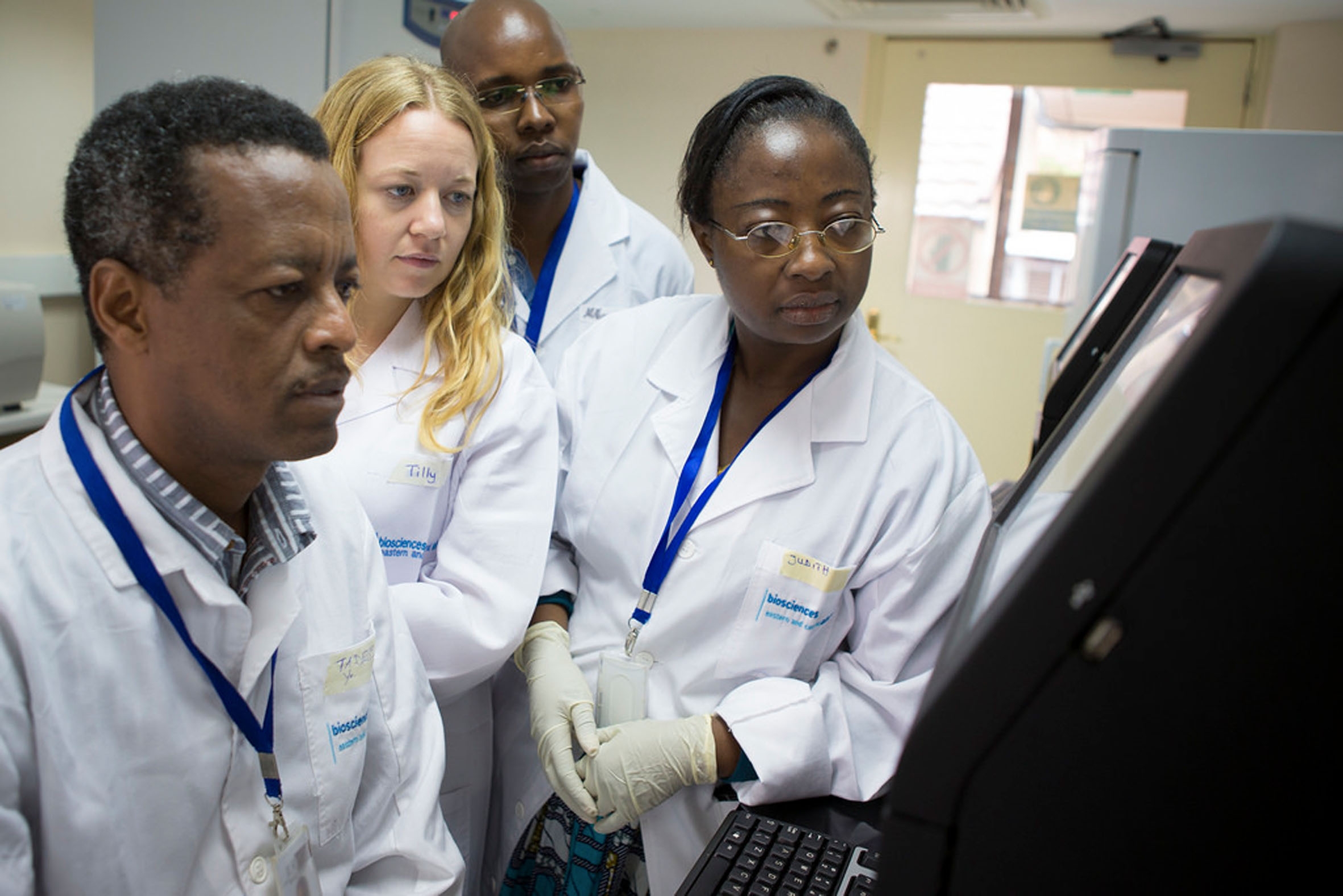
Tilly Eldridge from John Innes Centre, UK (2nd left) and Collins Mutai of BecA-ILRI Hub (2nd right) support Africa Bioscience Challenge Fund fellows, Nairobi 2016 (photo: BecA-ILRI Hub/Alnoor Mohammed)
16 June 2017—A new initiative to speed up crop improvement in sub-Saharan Africa – Alliance to Champion the Acceleration of Crop Improvement in Africa (ACACIA) was launched today. The alliance has been established by founding members, the International Livestock Research Institute (ILRI) through the Biosciences eastern and central Africa-ILRI (BecA-ILRI) Hub in Kenya and the John Innes Centre (JIC) in the UK.
Speaking at the launch, which took place at JIC-UK, the BecA-ILRI Hub director, Jacob Mignouna noted that the initiative will fast-track scientific strides being made by African scientists and their international partners to achieve food security and improve nutrition through sustainable agriculture.
‘This alliance will harness the strengths of the global scientific community, as well as the recent advances in technology to find lasting solutions to the challenge of food insecurity in Africa’ said Mignouna.
‘ACACIA will build on the existing BecA-JIC alliance to provide African crop researchers and institutes access to cutting edge technologies’ added Appolinaire Djikeng, immediate former BecA-ILRI Hub director
‘We hope to develop a cadre of UK scientists who have a deeper understanding of the agricultural challenges in Africa and can connect to African scientists to achieve significant impact through their expertise,’ said JIC director, Dale Sanders.
Cristobal Uauy, JIC’s academic lead for international development and co-leader of ACACIA, stressed the importance of strong linkages with African National Agricultural Research Systems, CGIAR Research Centres and advanced international research institutions to advance the improvement of important African food crops.
‘This initiative will leverage strategic, multidisciplinary partnerships to contribute to the achievement of the second United Nations Sustainable Development Goal of zero hunger,’ said Uauy
‘Africa has a quarter of the world’s arable land, but generates only 10 per cent of global agricultural output,’ said ILRI director general Jimmy Smith. ‘The partnerships consolidated through ACACIA will strengthen access to tools for crop improvement for the ultimate benefit of smallholder farmers in Africa,’ he added.
____________________________________________________________________
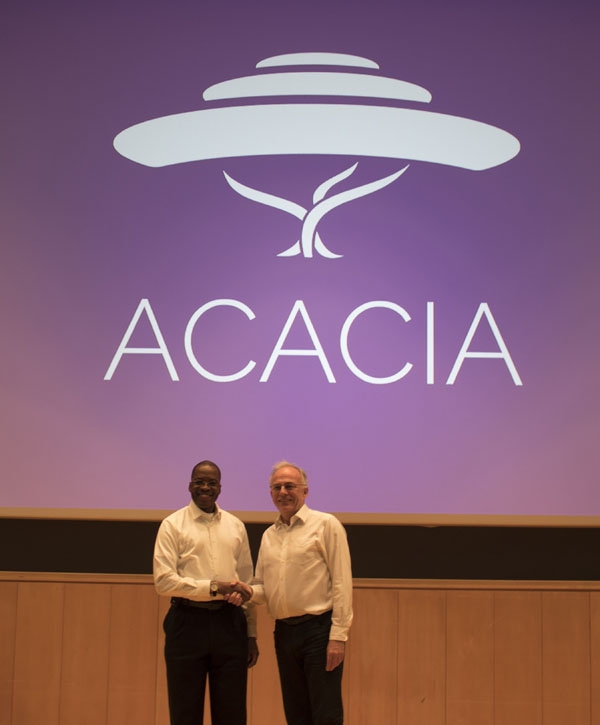
The BecA-ILRI Hub director Jacob Mignouna and JIC director Dale Sanders shake hands on the launch of ACACIA at the John Innes Centre, UK (photo: JIC)
About ACACIA
The establishment of ACACIA has been made possible through initial funding awarded to JIC by the Bill & Melinda Gates Foundation and by the UK’s Biotechnology and Biological Sciences Research Council (BBSRC). Activities carried out under ACACIA will build on achievements realized through financial support to the BecA-ILRI Hub from the Australian government, Australian Centre for International Agricultural Research (ACIAR), European Union, International Development Research Centre (IDRC), Swedish International Development Cooperation Agency (Sida), Syngenta Foundation for Sustainable Agriculture, UK Department for International Development (DFID), US Defense Threat Reduction Agency and the Wellcome Trust, UK.
New project to accelerate use of innovations for increased agricultural productivity in Africa
- Details
- Written on Wednesday, 14 June 2017 17:32
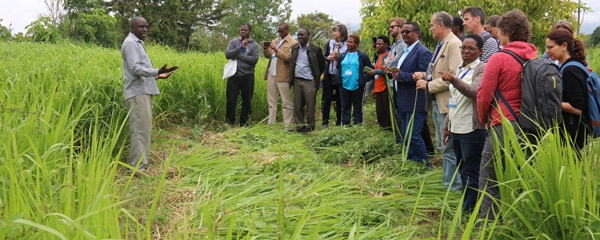
Farmer David Ndambuki talks of his success in growing Brachiaria grass. The InnovAfrica inception workshop included a field trip to Kangundo, Machakos County in eastern Kenya to meet farmers who have adopted Brachiaria grass as a means of improving livestock productivity and increased income (photo: BecA-ILRI Hub/Collins Mutai)
14 June 2017: An ambitious project to increase the adoption rate of agricultural technologies and reduce the food insecurity burden in Africa was launched at the International Livestock Research Institute (ILRI) Nairobi Campus last week.
The Innovations in Technology, Institutional and Extension Approaches towards Sustainable Agriculture and Enhanced Food and Nutritional Security in Africa (InnovAfrica) project is jointly coordinated by the Bioscience eastern and central Africa-ILRI (BecA-ILRI) Hub and the Norwegian Institute of Bio-economy (NIBIO). This four-year project will spearhead the implementation and promotion of innovations that have potential to sustainably increase agricultural productivity in Sub Saharan Africa.
According to the Food and Agriculture Organization of the United Nations (FAO), sub Saharan Africa continues to have high levels of food and nutrition insecurity despite advances in agricultural research and provision of extension services. The low uptake of innovations by farmers has been cited as a barrier transforming farming from subsistence to a profitable activity.
Speaking during the official opening of the five-day workshop marking the InnovAfrica launch, ILRI director general Jimmy Smith emphasized the need for the involvement of smallholder farmer right from the technology generation process.
‘If this project can turn ideas into solutions that add value from the customers’ perspective, then we will make a great contribution to food security search,’ said Smith.
‘Research that is supposed to benefit farmers is often carried out without ithe involvement of farmers,’ said Juvenal Musine, coordinator of the Federation of Farmers and Pastoralists of Rwanda (IMBARAGA). ‘We hope this project will integrate our indigenous knowledge into the new technologies,’ he added.
Adding his voice to the call to work closely with farmers, NIBIO director general Nils Vagstad said ‘It all begins with the farmers–empowering them and building their capacity to handle their challenges.’
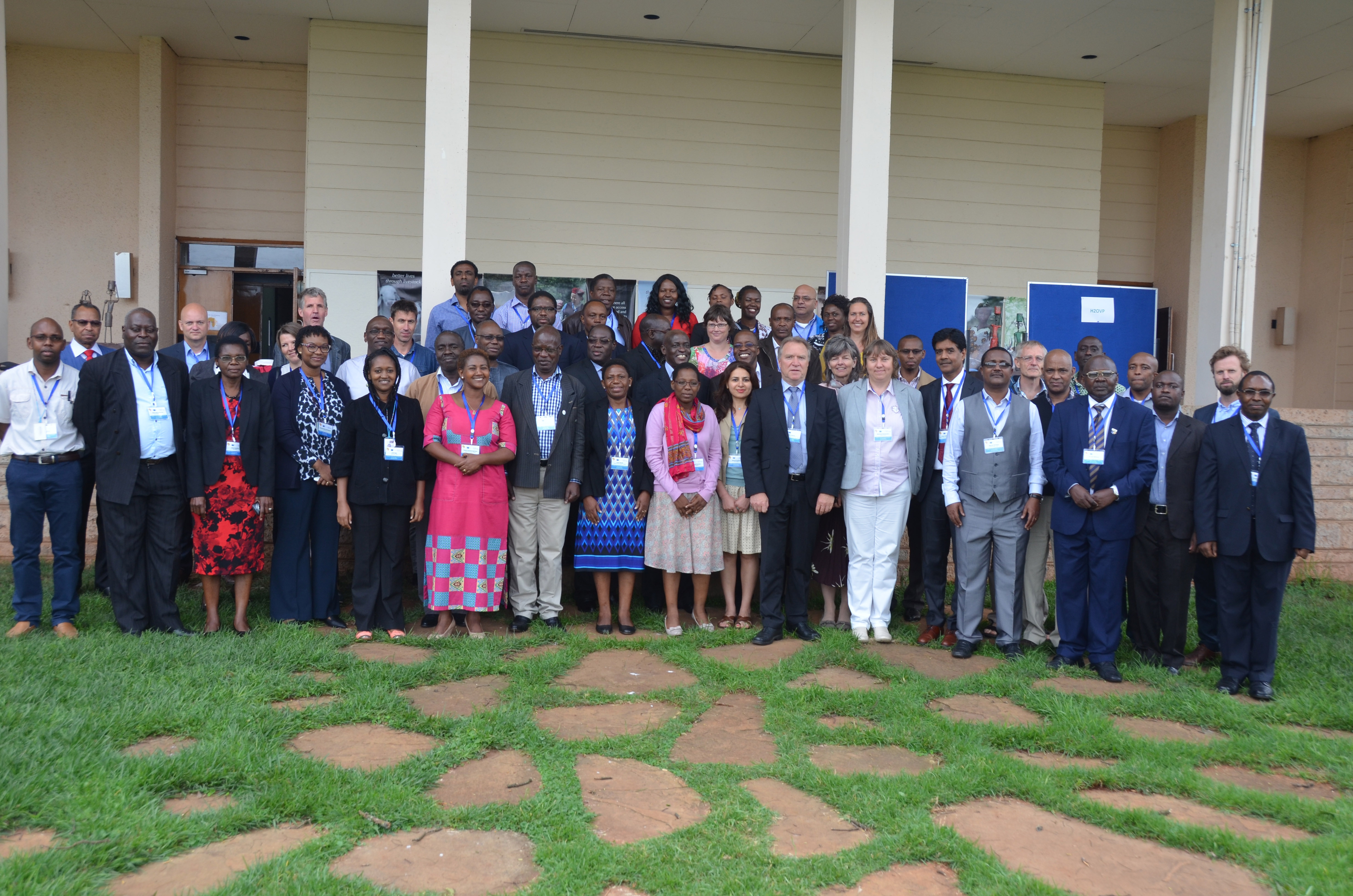
Participants of the InnovAfrica project inception workshop – ILRI, Nairobi 5 June 2017 (photo: ILRI Hub/Newton Wanga)
InnovAfrica brings together a multidisciplinary team of experts from 16 institutions including African national agricultural research systems (NARS), CGIAR and international institutions, farmer group representatives and private sector partners. The project spans six African countries – Ethiopia, Kenya, Malawi, Rwanda, Tanzania and South Africa – and is funded under the European Union (EU) Africa Research and Innovation Partnership, a partnership between EU and the African Union.
The BecA-ILRI Hub director Jacob Mignouna noted that partnerships and capacity building were at the heart of the project, which will use new approaches of extension services to increase smallholder farmers’ ability to adopt innovative agricultural systems.
European Commission research programming and policy officer Agnieszka Romanowicz lauded the plans to support the practical application of research findings through multi-actor platforms.
‘What the EC would like to see from this project is the uptake of research products,’ said Romanowicz.
_____________________________________________________________________________________
Read related story: First step towards increased food and nutritional security in Africa
About InnovAfrica
The InnovAfrica project aims at improving food and nutritional security in Africa. This will be achieved by integrating sustainable agriculture intensification systems and innovative institutional approaches with novel extension and advisory services by enhancing capacity building and knowledge sharing in smallholder farming in sub-Saharan Africa (SSA).
The project is coordinated by NIBIO and the BecA-ILRI Hub and brings together a consortium of partners including:
- Haramaya University (Ethiopia)
- Kenya Agricultural and Livestock Research Organization (Kenya)
- Kenya National Farmers' Federation (Kenya)
- University of Malawi (Malawi)
- Soils Food and Healthy Communities Organization (Malawi)
- Rwanda Agriculture Board (Rwanda)
- Modern Dairy Farmers' Cooperative (IAKIB) (Rwanda)
- Sokoine University of Agriculture (Tanzania)
- University of Tuscia (Italy)
- Stichting Dienst Landbrouwkundig Onderzoed (DLO-Alterra) (the Netherlands)
- Norwegian University of Life Sciences (Norway)
- Agricultural Research Council (South Africa)
- International Maize and Wheat Improvement Center (CIMMYT) South Africa Regional Office (Zimbabwe)
- Knowledge Intelligence Applications GmbH (Germany)
The project is funded by the EC under the Horizon 2020 program.
Strengthening bioscience research capacity in Uganda: BecA-ILRI Hub partnership with Gulu University
- Details
- Written on Tuesday, 13 June 2017 17:36
13 June 2017–The Gulu University vice chancellor Nyeko Pen-Mogi visited the Biosciences eastern and central Africa-International Livestock Research Institute (BecA-ILRI) Hub in Nairobi yesterday.
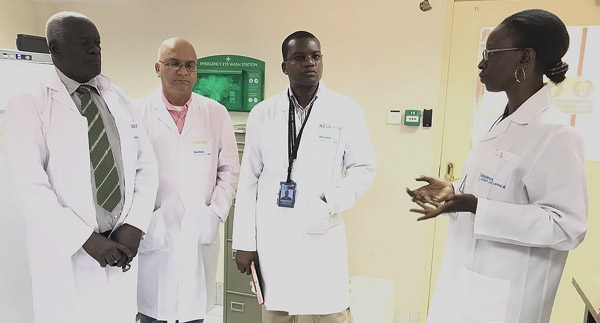
Prof Nyeko Pen-Mogi, Gulu University Vice Chancellor meets with scientists Sita Ghimire, Wellington Ekaya and Josephine Birungi at the BecA-ILRI Hub (photo: BecA-ILRI Hub)
Pen-Mogi was exploring opportunities to strengthen the capacity of the team charged with establishing and maintaining a USD 12 million biosciences research facility at the Gulu University, northern Uganda.
‘I want to ensure that my team is competent in operating and maintaining all the equipment that will be installed in the new lab,’ said Pen-Mogi, adding that he was pleased with the increased capacity of his staff who had already received training at the BecA-ILRI Hub.
The partnership between Gulu University and the BecA-ILRI Hub begun in 2009 with support to the university in developing a proposal that earned the institution a grant to establish a bioscience platform to support the human medicine, veterinary medicine, plant science and basic sciences faculties of the university.
To date, the Ugandan institution has benefited from a range of capacity building activities including research mentorship through the Africa Biosciences Challenge Fund (ABCF) fellowship program; training during the BecA-ILRI Hub annual training workshops; hosting special trainings on laboratory management. In 2014, a team from the BecA-ILRI Hub and ILRI engineering department provided technical support in installing the university’s bioscience platform.
During his visit, Pen-Mogi met ABCF fellows from Gulu University currently conducting part of their research at the BecA-ILRI Hub including: Geofrey Kawube a lecturer investigating blast disease management in improved finger millet; and Godfrey Otim and Geoffrey Wokorach who are developing and validating a new diagnostic tool for detection and characterization of sweet potato viruses in East Africa.
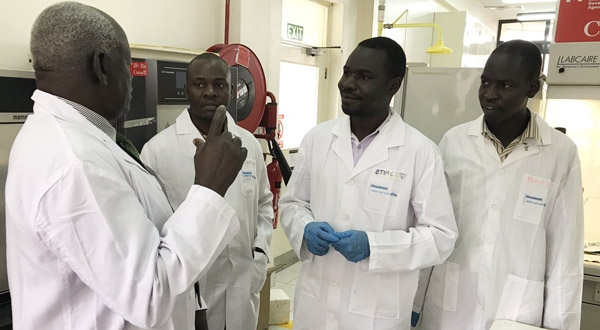
Gulu University vice chancellor Nyeko Pen Mogi talks to Africa Bioscience Challenge Fund research fellows from Gulu University who are currently conducting research at the BecA-ILRI Hub (photo: BecA-ILRI Hub)
______________________________________________________________________________
Read related story: BecA-ILRI Hub installs bioscience lab at Gulu University in Uganda
Listen to related interviews: Gulu University Gets UGX 1.8 Billion Bio Science Research Lab
The BecA-ILRI Hub to support implementation of World Bank centers of excellence initiative
- Details
- Written on Sunday, 14 May 2017 10:32
20 April 2017—The Biosciences eastern and central Africa-International Livestock Research Institute (BecA-ILRI) Hub is set to play a key role in implementing World Bank funded Eastern and Southern Africa Higher Education Centers of Excellence Project (ACE II) initiative.
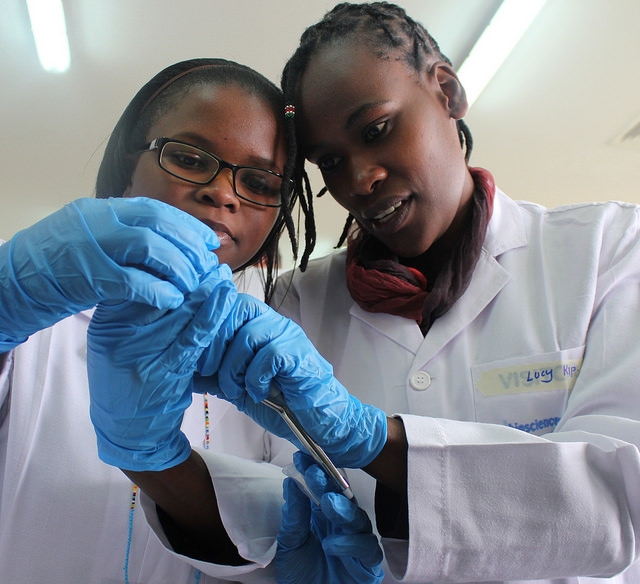
Lucy Kiptui of Egerton University, Kenya (right) and Helen Butungi of ICIPE, Uganda during the BecA-ILRI Hub's annual Advanced Genomics and Bioinformatics workshop in Nairobi, August 2016. Egerton University is among the ACE II institutions that will receive technical and capacity strengthening support from the BecA-ILRI Hub
As a technical partner to four East African institutions (Egerton University, Kenya; Sokoine University and Nelson Mandela African Institution of Science and Technology, Tanzania; and Makerere University, Uganda), the BecA-ILRI Hub will provide technical backing and support the strengthening of capacity for researchers from national institutions through fellowships and workshops.
The ACE II is the second phase of an initiative first launched in West and Central Africa. The new phase will be implemented in 24 centers across eight countries—Ethiopia, Kenya, Malawi, Mozambique, Rwanda, Tanzania, Uganda and Zambia—and seeks to build research capacity in five regional priority areas: agriculture, applied statistics, education, health, and industry (science, technology, engineering and mathematics or STEM).
The Kenya chapter of the initiative was officially launched by Education Cabinet Secretary Fred Matiang’i earlier this month. Already, Egerton University has advertised calls for applications for Masters and PhD Scholarships in sustainable agriculture and agribusiness management to be conducted in part at the BecA-ILRI Hub. Other Kenyan institutions participating in the project are Jaramogi Oginga Odinga University of Science and Technology focusing on sustainable use of insects as food and feeds; and Moi University focusing on phytochemicals, textiles and renewable energy (PTRE).
Through this project, each center of excellence will receive USD 4.5–6 million over five years. With this funding, the centers are expected to achieve higher institutional capacity for quality education and advanced research; enhanced national, regional and international research partnerships for increased impact; and improved institutional management.
Transfering the Golden Gate technology to crop research in Ethiopia
- Details
- Written on Friday, 12 May 2017 17:41
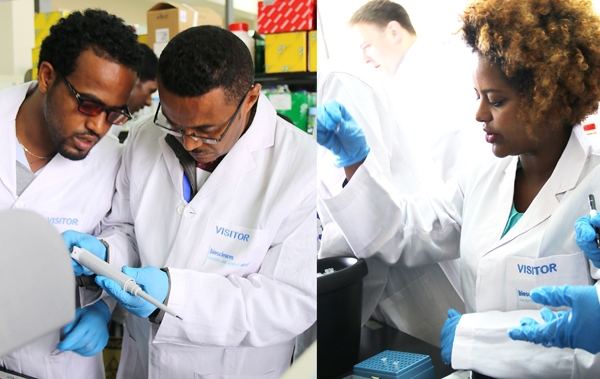
Participants attend hands-on sessions the Golden Gate technology workshop at the BecA-ILRI Hub 4 May 2017 (photo: BecA-ILRI Hub/Ethel Makila).
From 3–5 May 2017, the Biosciences eastern and central Africa-International Livestock Research Institute (BecA-ILRI) Hub hosted a workshop on Golden Gate technology for researchers from the Ethiopian Institute of Agricultural Research (EIAR), Hawassa University and Ethiopian Biotechnology Institute.
The workshop aimed at familiarizing the researchers with the technology, which can reduce months or years of plant transformation work to a matter of days. The Golden Gate technology allows the rapid assembly of DNA constructs that contain multiple desirable genes, ready for transformation and testing in plants.
The platform at the BecA-ILRI Hub was established with support from the John Innes Centre (JIC) in May 2015. Andy Breakspear and Christian Rogers of JIC conducted the workshop, with support from BecA-ILRI Hub’s Leah Kago.
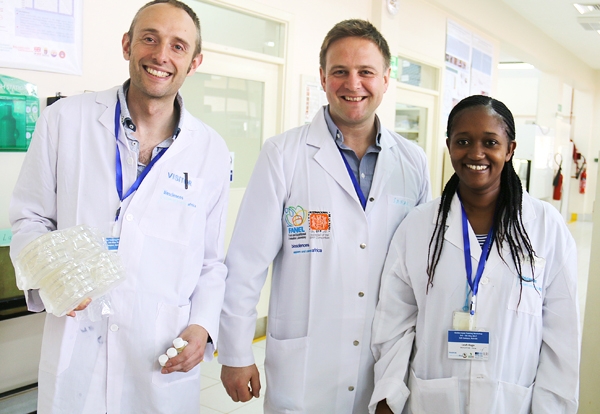
Trainers Andy Breakspear and Christian Rogers from John Innes Centre-UK with BecA-ILRI Hub research associate Leah Kago during the Golden Gate training May 2017 (photo: BecA-ILRI Hub/Ethel Makila)
The BecA-ILRI Hub's Appolinaire Djikeng appointed director of international tropical livestock centre
- Details
- Written on Wednesday, 26 April 2017 10:27
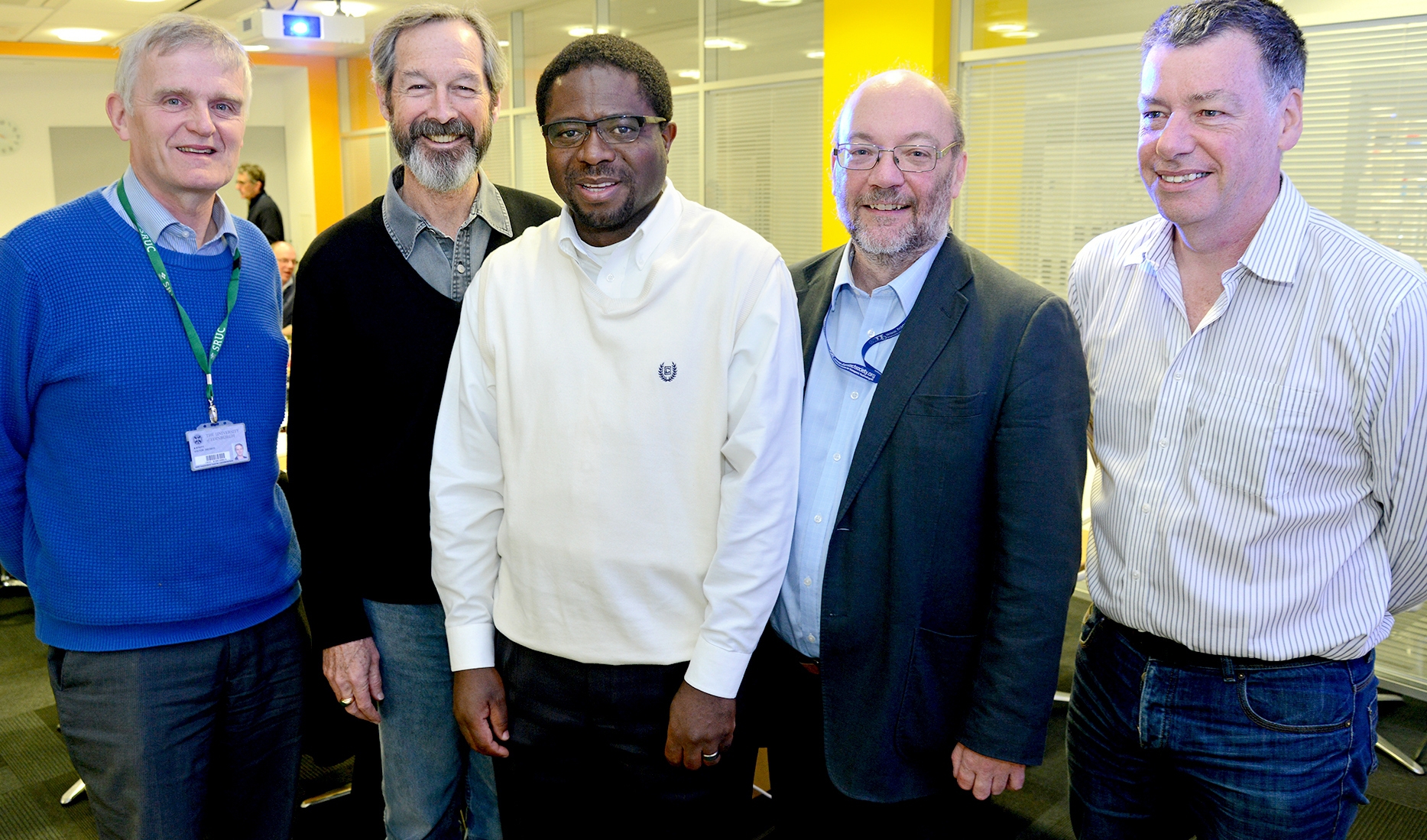
Appolinaire Djikeng (centre) with (left to right) Alistair Stott (Scotland’s Rural College), David Hume, Bruce Whitelaw (both Roslin Institute) and Steve Kemp (ILRI) (photo credit: Roslin Institute/Norrie Russell)
Appolinaire Djikeng has been appointed director of the Centre for Tropical Livestock Genetics and Health (CTLGH), a partnership between the University of Edinburgh, Scotland’s Rural College (SRUC) and the Africa-based International Livestock Research Institute (ILRI).
Djikeng who is currently director of the Biosciences eastern and central Africa- (BecA)-ILRI Hub in Nairobi, has also been appointed to a new Chair in Tropical Agriculture and Sustainable Development at the University of Edinburgh.
With a background and interests in genomics, Djikeng brings to his new appointment a wealth of experience in developing and leading biosciences research and development and capacity building programs across agricultural development and public health initiatives.
The Centre for Tropical Livestock Genetics and Health was established to build on the world-class research expertise of its partner institutions, ensuring the development and deployment of genetics and genomics technologies to improve livestock productivity and livelihoods in the tropics.
The BecA-ILRI Hub at conference to increase food availability by reducing postharvest loss
- Details
- Written on Friday, 31 March 2017 10:35
28-31 March 2017—The BecA-ILRI Hub participated in the 1st All Africa Postharvest Congress and Exhibition held at the Safari Park Hotel in Nairobi, Kenya.
According to the United Nations, the world population will reach the nine billion by 2050 with Africa’s population accounting for almost 30 percent. Meeting the food and nutrition needs of this growing population requires 70 percent increase in food availability. Approximately 1.3 billion metric tons of food produced annually is (one third of the production) is lost along the supply chains globally. Thus the reduction of food losses and waste is an important strategy to mitigate the shortfall in food availability.
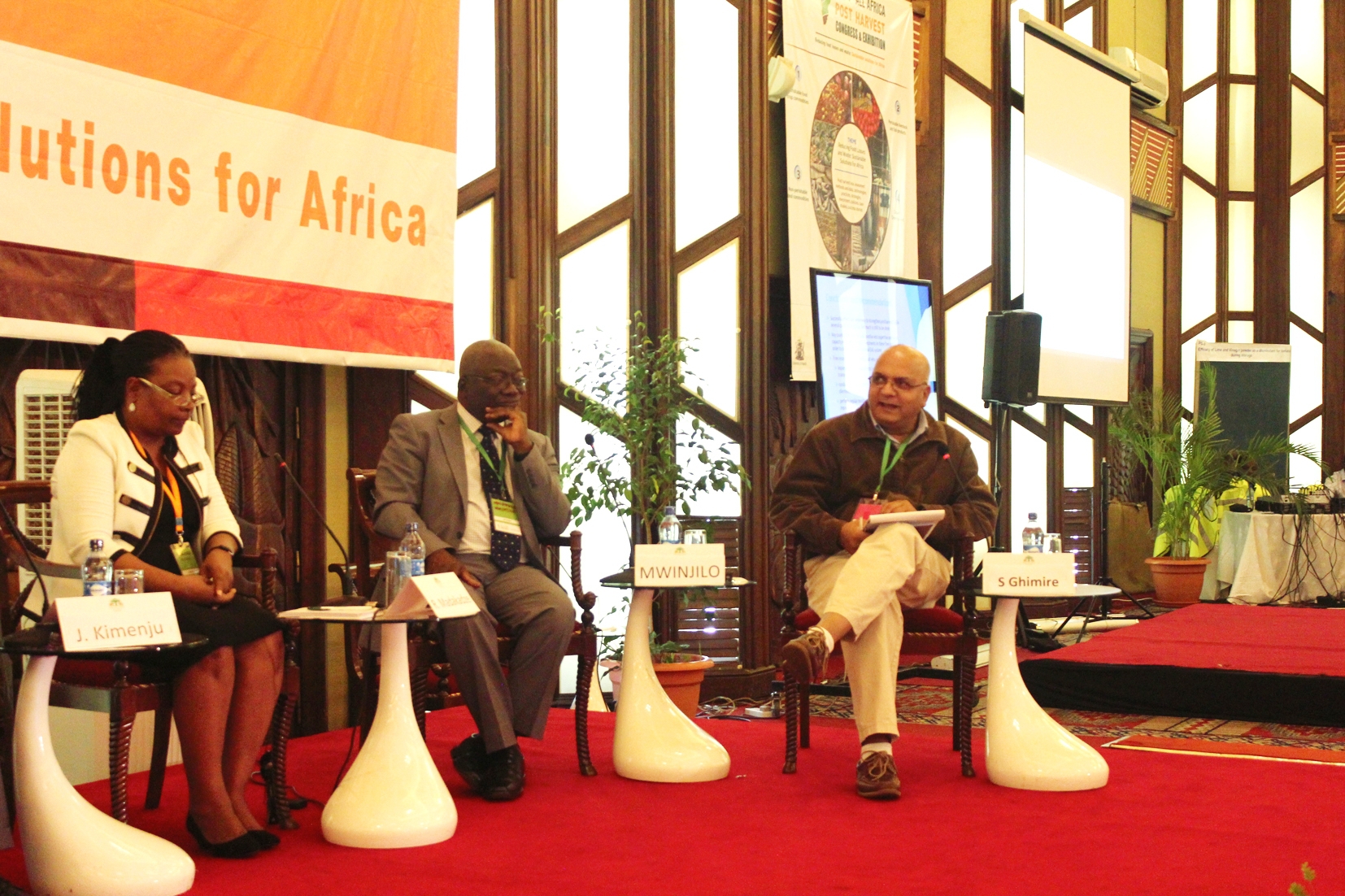
The BecA-ILRI Hub's Sita Ghimire (right) participates in panel discussion on the role of capacity strengthening in managing postharvest losses in Africa (photo: BecA-ILRI Hub/Eleni Vikeli)
Jane Ambuko, a lecturer at the University of Nairobi and an alumnus of the BecA-ILRI Hub’s Africa Biosciences Challenge Fund (ABCF) capacity building program, championed the convening of the conference as the local organizing committee. The BecA-ILRI Hub plays a key role in strengthening the research capacity of individuals and institutions in African national agricultural research systems (NARS) through the ABCF program. Forty researchers are nominated annually by the NARS to conduct research at the BecA-ILRI Hub through fellowships, while over 200 benefit from training offered through workshops in key skill areas.
According to BecA-ILRI Hub scientist Sita Ghimire, NARS are not investing enough in postharvest research. ‘Out of 600 applications to the ABCF fellowship program, only about 30 focus on postharvest management issues’ he said.
Ghimire was made this disclosure as a panelist in discussions on the role of capacity development in research on reduction of postharvest food losses and waste. Other panelists supported his view, calling for more attention to be given to curriculum on postharvest waste management in institutions of higher learning.
‘Universities need to institutionalize postharvest research rather than have it embedded in time-bound projects,’ said Paul Nampala, the grants manager at the Regional Universities Forum for Capacity Building in Agriculture (RUFORUM) secretariat.
The conference featured the Postharvest Technologies Challenge (PTC) for innovators from all over Africa to share new technologies and ideas developed within the African context.
Ugandan Minister of Science, Technology and Innovation visits the BecA-ILRI Hub
- Details
- Written on Thursday, 16 March 2017 06:45
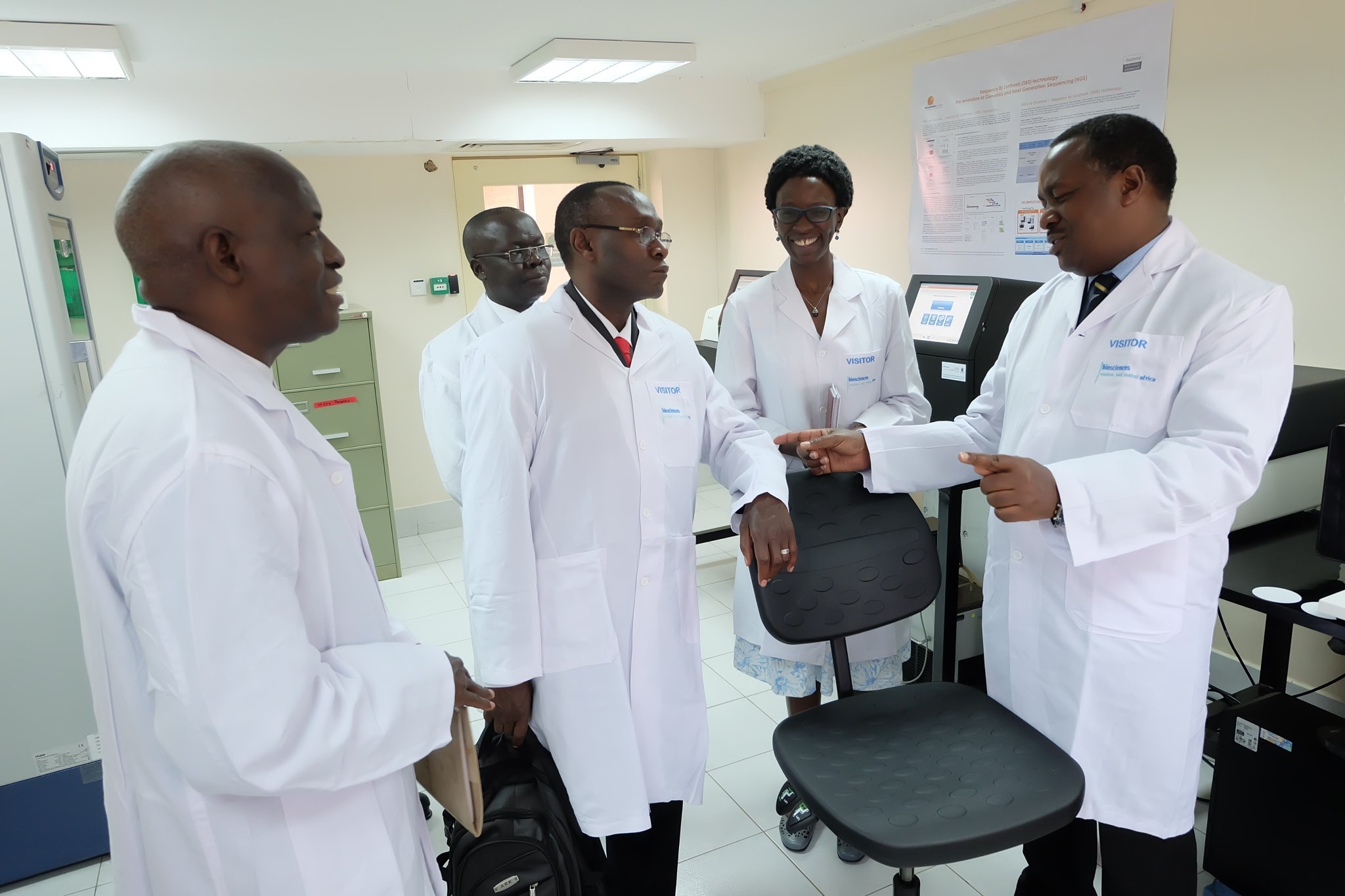
The Ugandan Minister for Science and Technology and Innovation, Hon. Elioda Tumwesigye, visited the BecA-ILRI Hub on Thursday 9 March 2017. Tumwesigye, who was at the ILRI Nairobi campus for a meeting at the African Agricultural Technology Foundation (AATF) had an opportunity to meet Africa Bioscience Challenge Fund (ABCF) research fellows from Uganda who are currently working at the BecA-ILRI Hub. Accompanying the Minister were AATF executive director Denis Kyetere, Uganda National Council for Science & Technology executive director Peter Ndemere and AATF’s Open Forum on Agricultural Biotechnology in Africa (OFAB) project manager, Daniel Otunge.
Five-day technologists’ training at the BecA-ILRI Hub to enhance national agricultural research
- Details
- Written on Thursday, 09 March 2017 12:43
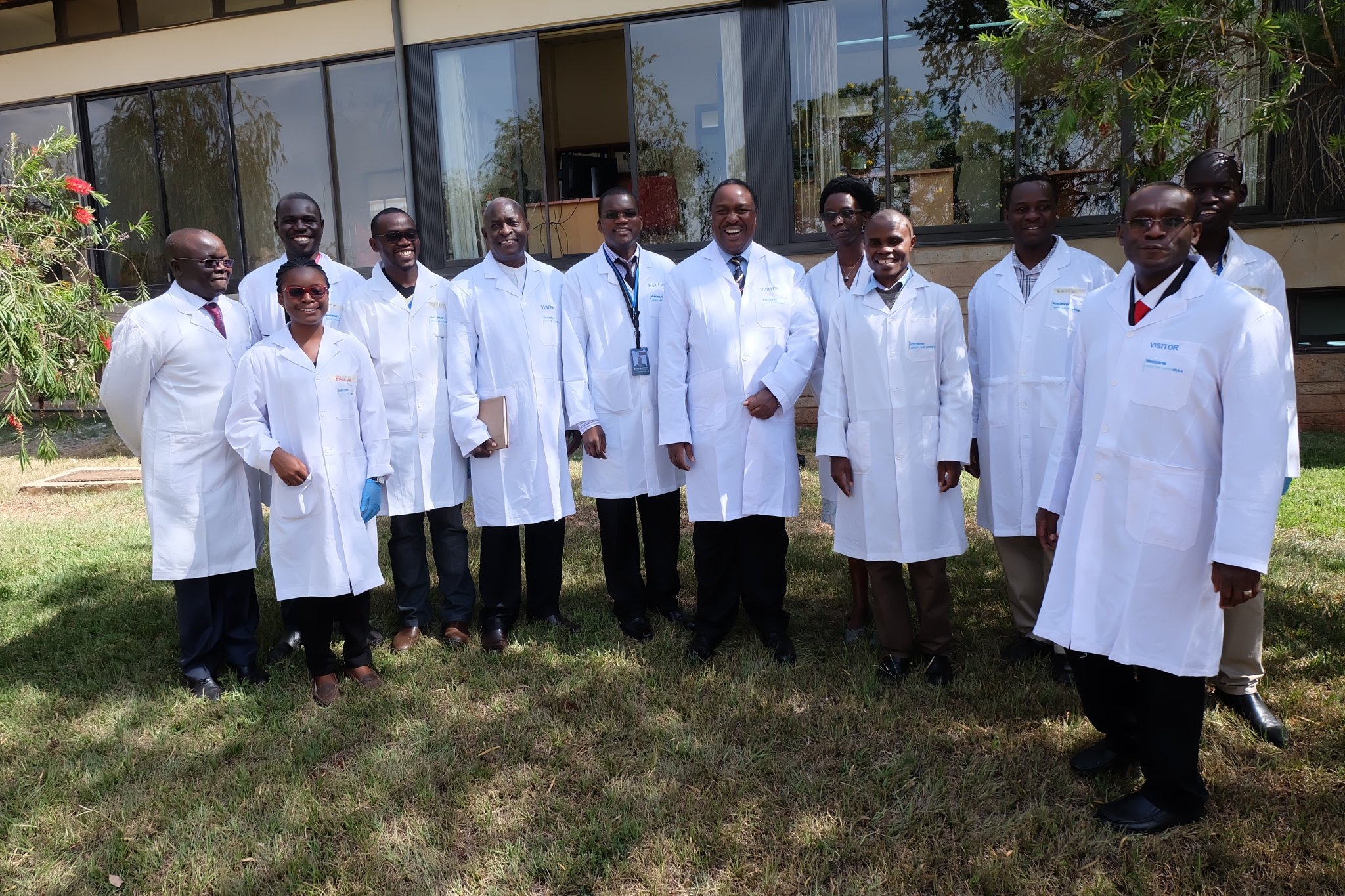
After five days of intensive experiential learning at the BecA-ILRI Hub, six laboratory technologists from the Democratic Republic of the Congo (DRC), Kenya, Tanzania and Uganda were equipped with skills that will enhance their capacity to support scientists, teach and design research at their home institutions.
The training for technologists, conducted by the BecA-ILRI Hub from 27 February–03 March 2017 at ILRI’s Nairobi campus, is a deliberate effort to enhance support to emerging science leaders in national agricultural research systems (NARS). Every year, the BecA-ILRI Hub offers fellowships to over 50 NARS scientists through the Africa Biosciences Challenge Fund (ABCF) program. These scientists enhance their skills and knowledge in research, and receive mentorship in science leadership and resource mobilization.
There are however, limited opportunities for laboratory technologists and technicians in most African NARS, to upgrade their skills in tandem with the researchers. This poses a real challenge in getting effective support to sustain advanced research by ABCF research fellows on returning to their home institutions. During the 5-day training, the technologists experienced hands-on learning while embedded within diverse, ongoing research projects by ABCF research fellows.
‘I have learnt how to use equipment available at my home institution but which lack staff trained to operate them,’ said John Mshanga from the Nelson Mandela African Institution of Science and Technology in Tanzania.
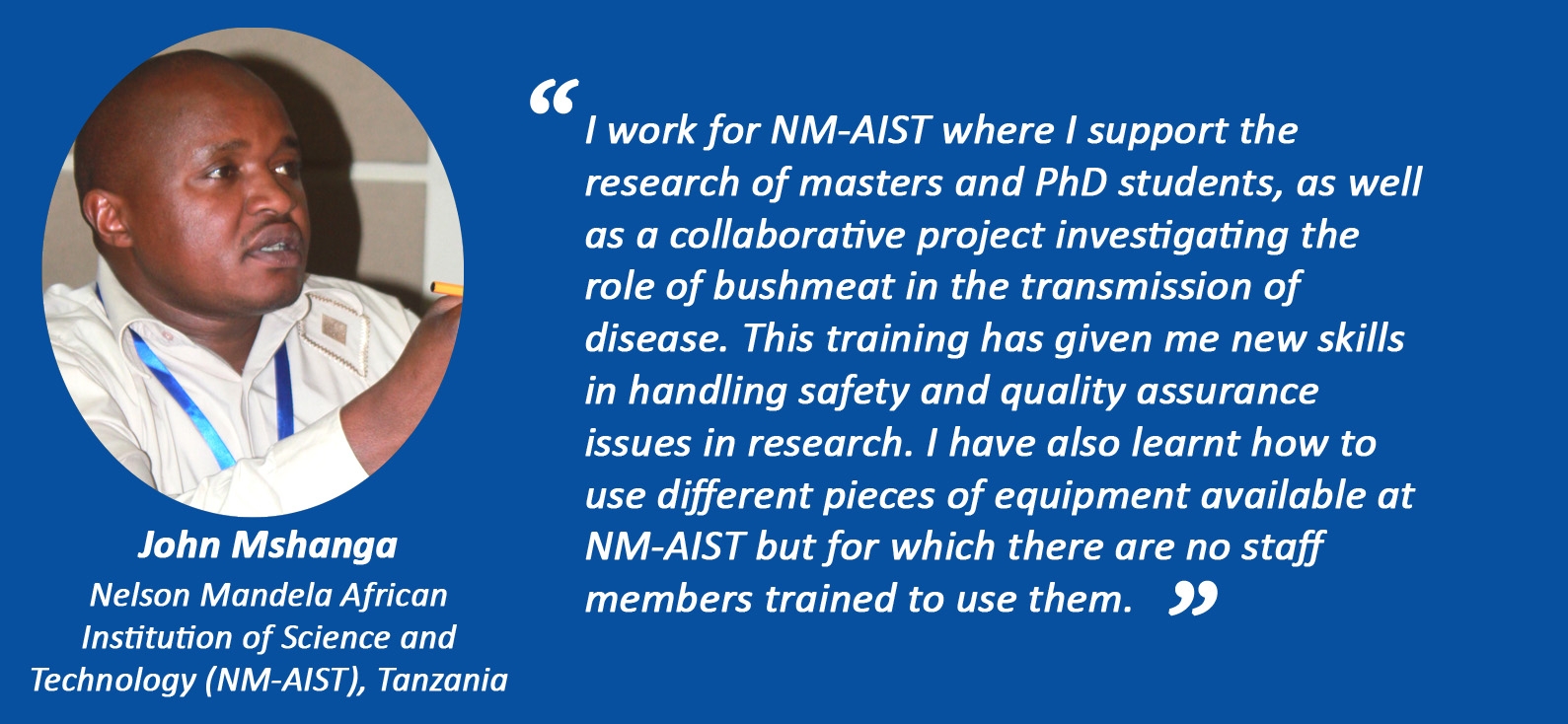
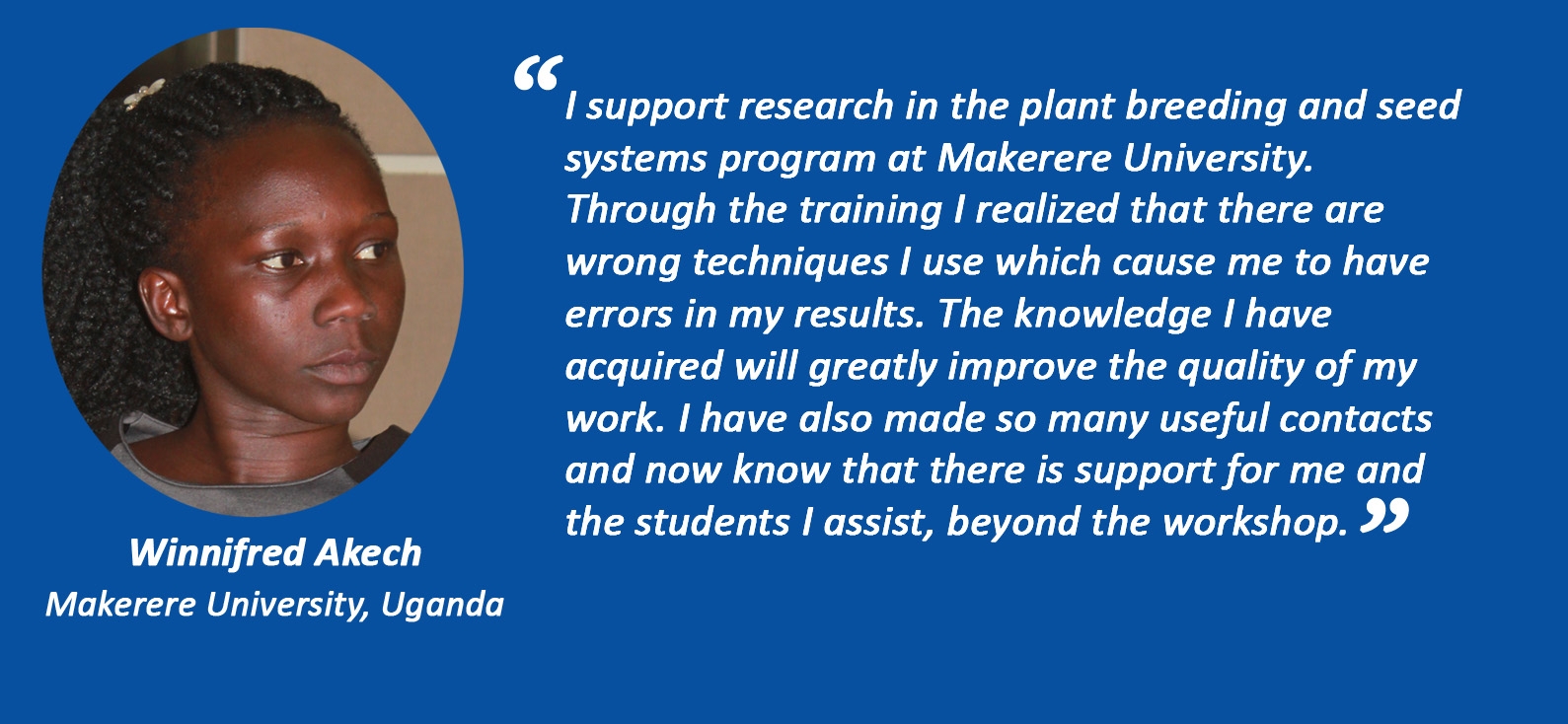
‘Through this workshop I have also made so many useful contacts,’ said Winnifred Akech from Makerere University, ‘I now know that there is support for me and the students I assist, beyond this workshop,’ she added.
The pilot training will help the BecA-ILRI Hub to better understand the capacity gaps in agricultural bioscience research support in African NARS.
‘Our alumni are key drivers of change within the NARS,’ said BecA-ILRI Hub capacity building senior scientist, Wellington Ekaya, adding that they can only be effective researchers and change agents if supported by technologists with the necessary capacity.
MPhil Seed Science Technology at West Africa Centre for Crop Improvement (WACCI) University of Ghana – Call for applications
- Details
- Written on Friday, 03 March 2017 10:07
The West Africa Centre for Crop Improvement (WACCI) is currently inviting applications for MPhil Seed Science Technology at WACCI, University of Ghana. Successful applicants will enrol in August 2017 and will comprise the third cohort of MPhil students. WACCI will provide full-time scholarship for a limited number of students this year on a competitive basis. We invite highly motivated students to apply.
Eligibility:
Prospective students must have:
- A good first degree, at least a second class lower division in Agriculture, Botany or related field at the University of Ghana or any other recognised University in the Western and Central Africa Region.
- For candidates whose first language is not English, a certificate of proficiency in English is required
Please, visit http://wacci.edu.gh/eligibility for full details on eligibility.
How to Apply:
Interested applicants should:
- Complete an online form on the University of Ghana Graduate Admissions Page
- Academic transcripts, copies of First Degree certificate, MPhil Proposal (Concept Note).
- The email addresses of (3) referees must also be provided on the online form.
Visit the following link for detailed information on how to apply http://www.wacci.edu.gh/apply
Application deadline: April 15, 2017
For any additional information please contact the Admissions Officer on Telephone: +233-303-707-9427 or Email: info(at)wacci.edu.gh
The BecA-ILRI Hub alumni run DNA barcoding training for Kenya plant health regulatory body
- Details
- Written on Thursday, 23 February 2017 09:03
23 February 2017—The BecA-ILRI Hub is providing technical support to a three-day workshop on DNA barcoding at the Kenya Plant Health Inspectorate Services (KEPHIS)
Alumni of the BecA-ILRI Hub’s Africa Bioscience Challenge Fund (ABCF) fellowship program–Florence Munguti (acting officer in charge, plant quarantine station) and Isaac Macharia (acting regional manager, Mombasa) are facilitating the training which runs from 22–24 February at the KEPHIS plant quarantine station in Muguga on the outskirts of Nairobi, Kenya.
The training is as a major step in technology transfer to regional research institutions that are under constant pressure to tackle emerging challenges in agricultural research.
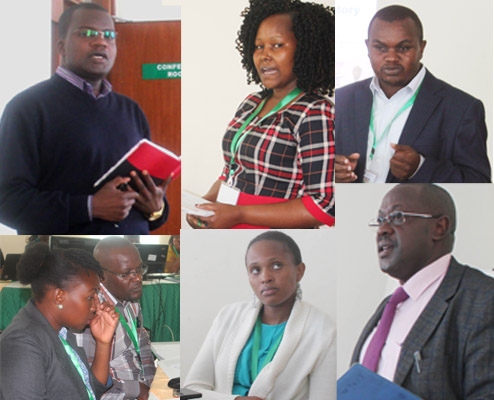
‘This training is evidence of sustainability of the BecA-ILRI Hub’s intervention towards strengthening bioscience research capacity to meet new research challenges in the region,’ said Wellington Ekaya who heads the BecA-ILRI Hub's capacity building ABCF program.
Through strategic and diverse partnerships with renowned international research and capacity building institutes, the ABCF program mentors and hosts of African scientists to enable them leverage advances in bioscience technology to advance their national and regional research priorities.
‘I realized that DNA barcoding, which I learnt while at the BecA-ILRI Hub, can enhance efficiency and accuracy in crop disease diagnostics’ said Macharia who developed a crop disease diagnostic tool to potentially prevent the 80 – 100 per cent losses currently experienced by tomato farmers in the region during his ABCF fellowship.
‘The facilities at the BecA-ILRI Hub are truly world-class’ said Munguti. ‘Researchers don’t have to leave the continent to conduct very advanced research with such labs close to home,’ she added, emphasizing that the mentorship and exposure offered had contributed significantly to her growth as a science leader.
James Wahome, KEPHIS general manager for phytosanitary services, officially opened the workshop. During his speech, Wahome lauded the training as a critical step to ensuring KEPHIS remained relevant in the region.
‘The Muguga facility not only serves Kenya but is a regional reference laboratory for plant protection for the Common Market for Eastern and Southern Africa (COMESA) region,’ said Wahome, ‘as such, it is imperative that we always stay a step ahead in technology.’
Training Workshop: Animal Quantitative Genetics and Genomics - call for applications 2017
- Details
- Written on Wednesday, 25 January 2017 09:05

The Biosciences eastern and central Africa-International Livestock Research Institute (BecA-ILRI) Hub seeks to strengthen the capacity of the African scientific community in the understanding and application of methods in quantitative genetics and genomics to support research that will improve agricultural products and enhance food security in the region. As part of its capacity building program, the BecA-ILRI Hub will hold a training course on Animal quantitative genetics and genomics from 19-30 June 2017.
This call seeks applicants from eastern and central Africa who require basic skills in quantitative genetics and genomics to support their research. Applicants will be selected based on evidence of productive scholarship and research; relevance of the workshop to current research; and engagement in agricultural research within a national research institute or university. Selected participants will attend an intensive 10-day training course at the ILRI campus in Nairobi, Kenya, with lectures and practical sessions in population genetics, mixed linear models, genetic markers, GWAS, genomic selection among others topics. Participants will also have on hand practical sessions on programming.
Applicant requirements
• A national of one of the BecA countries: Burundi, Cameroon, Central Africa Republic, Congo Brazzaville, Democratic Republic of the Congo, Equatorial Guinea, Eritrea, Ethiopia, Gabon, Kenya, Madagascar, Rwanda, São Tomé and Príncipe, Somalia, South Sudan, Sudan, Tanzania, Uganda. In exceptional cases, applicants from other African countries may be considered.
• Affiliation with a national research program or university in any of the above countries.
• Currently engaged in research in Animal breeding and genetics or in related subject.
• Good working knowledge of written and spoken English.
• Laptops will be desirable for the practical sessions.
Experts in animal quantitative genetics and genomics from the ILRI Animal Biosciences and international research partners from the College of Agricultural and environmental science (CAES) at the University of Georgia, USA will deliver the training.
Sponsorship
There are several funded places for this workshop, on a highly competitive basis. Applicants who can fund their participation will have added advantage. The approximate cost of the course is US$. 1800 excluding flights and accommodation.
Closing date for applications: midnight 31st March 2017 (Nairobi time).
The concept note is attached below.
Save
Save
Save
Save
Save
Save
Attachments: AQGG Concept Note Final.pdf[ ]445 kB
Training Workshop: Introduction to Molecular Biology and Bioinformatics - call for applications 2017
- Details
- Written on Tuesday, 24 January 2017 10:30

The Biosciences eastern and central Africa-International Livestock Research Institute (BecA-ILRI) Hub seeks to strengthen the capacity of the African scientific community to conduct bioscience research that will improve agricultural products and enhance food security in the region. As part of its capacity building programme, the BecA-ILRI Hub in collaboration with the Rwanda Agriculture Board, Rubona Centre will hold a training workshop on Introduction to Molecular Biology and Bioinformatics (IMBB) from 1-12 May 2017.
This call seeks applicants from eastern and central Africa who require basic skills in molecular biology and bioinformatics to support their research. Early career researchers working within national agricultural research systems will be selected based on evidence of productive scholarship and research; relevance of the workshop to current research; and engagement in agricultural research within a national research institute or University. Selected participants will attend an intensive 10-day training workshop at the BecA-ILRI Hub in Nairobi, Kenya. The training will include lectures and hands-on training in pathogen isolation and morphology, nucleic acid purification, molecular diagnosis by polymerase chain reaction (PCR), RLFP-PCR and isothermal nucleic acid amplification (LAMP) PCR, DNA sequencing and bioinformatics among others. Participants will also experience the research discovery process: potentially novel DNA sequences acquired by each participant will be analyzed and discussed during the bioinformatics sessions.

Applicant requirements
• A national of one of the BecA countries: Burundi, Cameroon, Central Africa Republic, Congo Brazzaville, Democratic Republic of the Congo, Equatorial Guinea, Eritrea, Ethiopia, Gabon, Kenya, Madagascar, Rwanda, São Tomé and Príncipe, Somalia, South Sudan, Sudan, Tanzania, Uganda;
• Affiliated with a national research institute or university in the BecA region;
• Currently engaged in biosciences research MSc or PhD (equivalent or higher) in biological sciences;
• Good working knowledge of written and spoken English.
Experts in molecular biology and bioinformatics from the BecA-ILRI Hub and research partners will deliver the training.
Sponsorship
There are several funded places for this workshop, on a highly competitive basis. Applicants who can fund their participation will have added advantage. The approximate cost of the course is US$. 1800 excluding flights and accommodation.
Closing date for applications: midnight 17th March 2017 (Nairobi time)
The concept note about this training workshop is available below.
Save
Save
Save
Save
Attachments:Workshop concept note[ ]233 kB
A launchpad to research impact in Africa
- Details
- Written on Friday, 10 February 2017 10:42
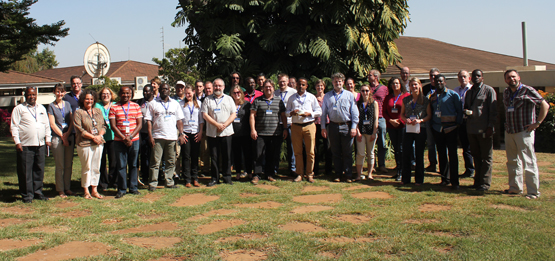
From 5–10 February, the BecA-ILRI Hub hosted scientists from top UK research institutions seeking strategic partnerships for collaborative research and transfer of technologies to increase the impact of their work on agricultural development in Africa.
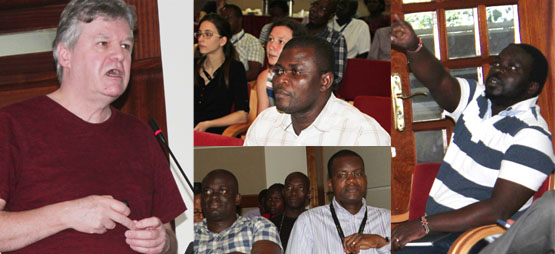
From the University of Cambridge, research group leader John Carr and PhD fellow Francis Wamonje, who have been collaborating with the BecA-ILRI Hub in the BBSRC funded project on common bean improvement, gave seminars to expound on their findings in the project and held discussions on possible future avenues of collaboration in the context of bean research.
Director, Neil Hall; head of plant genomics, Anthony Hall; and Robert Davey who heads the data infrastructure and algorithms group of the Earlham Institute gave seminars to demonstrate the bioinformatics and genomics capacity of their institution. They also participated in discussions with BecA-ILRI Hub, ILRI and ICRAF staff on possible joint resource mobilization to leverage their institution’s advanced research capabilities.

From Rothamsted Research, a team of 16 researchers led by Head of Grants and International Programmes Simon Vaughan, co-hosted a two-day workshop with the BecA-ILRI Hub to build new research partnerships with national agricultural research systems (NARS), CG centers and other advanced research institutions. The workshop explored future opportunities for substantive collaborations in livestock, crop and climate change research.
The BecA-ILRI Hub continues to act as a magnet to facilitate high-end biosciences research in Africa owing to its positioning at ILRI within the CGIAR system, its well-developed research network with NARS and its advanced capacity building, technological and research for development, capabilities.
Africa Biosciences Challenge Fund alumnus celebrated for outstanding research
- Details
- Written on Tuesday, 07 February 2017 12:20
Ethiopian researcher and BecA-ILRI Hub alumnus Asfaw Kifle has been awarded a Medal of Honor for his outstanding output in taro research.
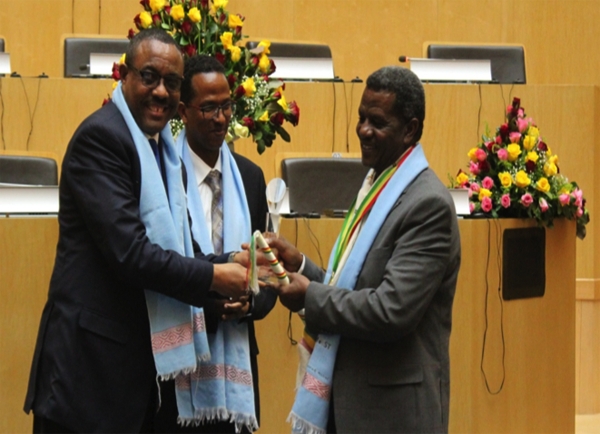
The researcher from the Ethiopian Institute of Agricultural Research (EIAR) was presented the award by Ethiopian Prime Minister Hailemariam Desalegn for his work on the under-researched yet significant food crop grown for its edible starchy corms.
A large population in south and southwest Ethiopia solely depends on root crops including taro for their daily food. Taro is prone to viral infection and as a result, its production has declined significantly. Kifle’s work focuses on understanding the genetic and agro-ecological variability of taro in Ethiopia with a view to increasing its production.
Kifle, who conducted part of his work at the BecA-ILRI Hub through the Africa Bioscience Challenge Fund (ABCF) fellowship program, is co-steward of the Taro Community of Practice (COP). The CoP is hosted by the BecA-ILRI Hub and comprises ABCF alumni working jointly to comprehensively tackle issues facing the crop.
Recent News View all News
-
BecA-ILRI Hub biennial report 2018-19
- Tuesday 14th July 2020
-
ABCF 2020 - Call for applications
- Saturday 14th December 2019
-
Brachiaria Grass is introduced to Masindi, Uganda
- Thursday 18th October 2018
-
Reducing Toxicity of Grass Pea
- Friday 28th September 2018